
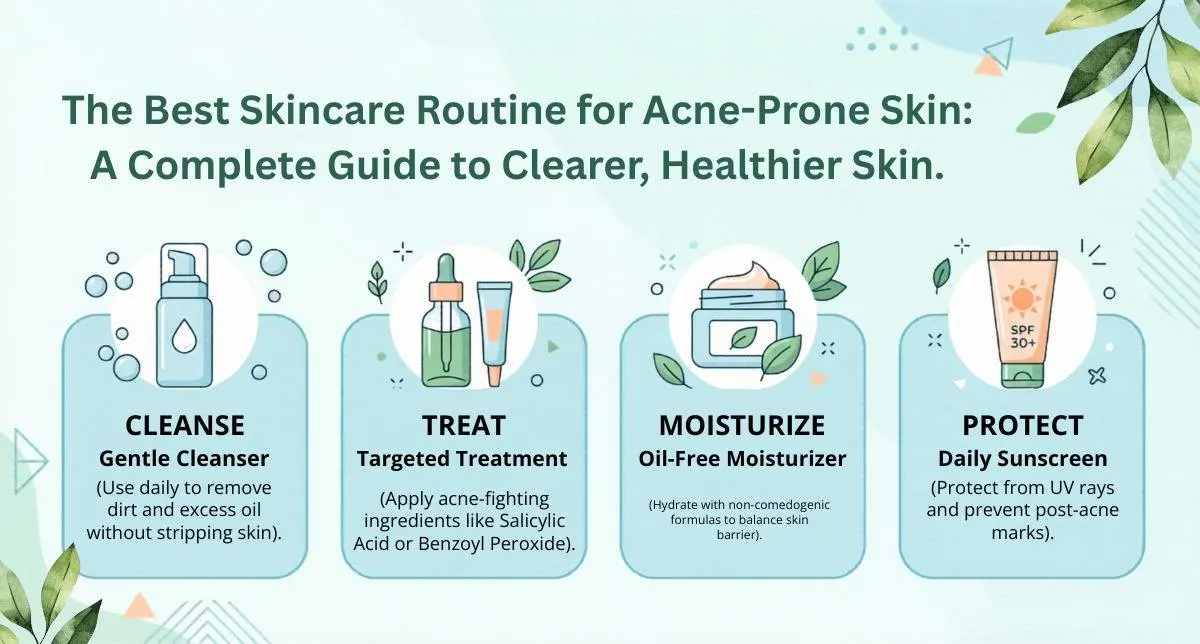
Acne is one of the most common skin
concerns worldwide, affecting teens and adults alike. Whether you deal with
occasional breakouts, persistent pimples, blackheads, or hormonal acne, a
consistent, evidence-based skincare routine can make a significant difference.
The key is simplicity, gentleness, and using the right ingredients without
over-stripping or irritating your skin.
Dermatologists
emphasize that less is often more for acne-prone skin. Overloading with too
many harsh actives can damage the skin barrier, increase inflammation, and
paradoxically worsen breakouts. This comprehensive guide outlines the best
daily routine, key ingredients, products to consider, what to avoid, and
additional tips for long-term success. Aim for consistency over perfection—results
typically appear in 4–8 weeks with patience.
Understanding Acne-Prone Skin
Acne
develops when excess oil (sebum), dead skin cells, and bacteria clog pores,
leading to inflammation. Hormones, diet, stress, genetics, and skincare habits
all play roles. Acne-prone skin is often oily or
combination but can also feel dry or dehydrated if over-treated. The goal of
any routine is to balance oil production, unclog pores, reduce bacteria and
inflammation, and strengthen the skin barrier.
Core Principles for Acne Skincare
- Non-comedogenic: Choose products labeled
"non-comedogenic" or "oil-free" to avoid clogging
pores.
- Gentle cleansing: Twice daily maximum.
Over-washing strips natural oils and triggers more sebum production.
- Patch test new products: Introduce one at a time to
monitor reactions.
- Consistency and patience: Stick with a routine for
at least a month before switching.
- Lifestyle support: Pair skincare with a
balanced diet, stress management, adequate sleep, and clean pillowcases
changed frequently.
- Consult a dermatologist: For moderate to severe
acne, prescription options like retinoids, antibiotics, or hormonal
treatments may be necessary.
Your Daily Skincare Routine for Acne-Prone Skin
Morning Routine (Focus: Protection and Oil Control)
The
morning routine prepares and shields your skin for the day.
- Cleanser (1–2 minutes) Use a gentle,
pH-balanced cleanser formulated for acne-prone or oily skin. Look for
ingredients like salicylic acid (BHA) for mild exfoliation or benzoyl
peroxide for antibacterial action. Avoid harsh scrubs or soap-based
cleansers. Example: Gel-based or foam cleansers with 0.5–2%
salicylic acid.
- Treatment Serum Apply a lightweight serum
with niacinamide (regulates oil, reduces redness, strengthens barrier),
salicylic acid (unclogs pores), or azelaic acid (anti-inflammatory,
brightening). Start with lower concentrations if your skin is sensitive.
- Moisturizer: Yes, even oily skin needs
moisturizer! Opt for lightweight, gel-based, non-comedogenic formulas with
hyaluronic acid, ceramides, or niacinamide to hydrate without
greasiness. This prevents the "rebound oiliness" from
dehydration.
- Sunscreen (Essential!) Broad-spectrum SPF 30+ (mineral preferred for less irritation—zinc oxide or titanium dioxide). Many acne treatments increase sun sensitivity. Choose matte or fluid formulas designed for acne-prone skin. Reapply every 2–3 hours if outdoors.
Evening Routine (Focus: Repair and Deep Treatment)
Nighttime may be when skin repairs itself. Double cleansing is helpful if you wear makeup
or sunscreen.
- Makeup/Sunscreen Removal (Optional first step) Use a
gentle micellar water or oil-free cleanser to remove the day's buildup
without stripping.
- Cleanser: Same as morning or a
slightly deeper one if needed. Thorough cleansing removes dirt, oil, and
bacteria accumulated during the day.
- Treatment/Actives
- Salicylic acid or benzoyl peroxide
for unclogging and killing bacteria.
- Retinoids (retinol, adapalene, or prescription
tretinoin)—the gold standard for acne, cell turnover, and preventing
clogged pores. Start slow (2–3 times a week) to avoid irritation,
dryness, or purging.
- Alternate actives if using
multiple (e.g., retinoid one night, benzoyl peroxide another) to minimize
irritation.
- Moisturizer: Same as morning or a
slightly richer one if your skin feels dry from actives. Barrier repair is
crucial.
- Spot Treatment (Optional) For active pimples: Benzoyl peroxide, salicylic acid, or tea tree oil-based formulas applied directly to spots.
Key Ingredients That Work
- Salicylic Acid (BHA): Oil-soluble, penetrates
pores to exfoliate and reduce blackheads/whiteheads.
- Benzoyl Peroxide: Kills acne-causing
bacteria (C. acnes).
- Niacinamide: Multi-tasker—controls oil,
reduces inflammation, improves texture.
- Retinoids: Prevent and treat acne
while addressing scarring and aging.
- Azelaic Acid: Gentle, effective for
acne, rosacea, and pigmentation.
- Ceramides & Hyaluronic
Acid:
Hydration and barrier support.
Ingredients and Habits to Avoid
- Comedogenic oils/butters: Coconut oil, cocoa butter,
shea butter (in high amounts), lanolin, isopropyl myristate/palmitate.
- Harsh exfoliants: Daily physical scrubs,
high-concentration AHAs without tolerance.
- Alcohol-heavy toners: They dry out skin and
impair the barrier.
- Picking or popping: Increases scarring and
inflammation.
- Over-exfoliating or too many
actives:
Leads to compromised barrier and rebound acne.
Other
habits to skip: Sleeping in makeup, touching your face frequently, and using
dirty makeup brushes or phone screens.
Weekly Add-Ons
- Clay mask (1–2x/week): Kaolin or
bentonite for oil absorption (don't overdo to avoid dryness).
- Gentle chemical exfoliation: If tolerated, a mild BHA
or PHA treatment.
- Avoid daily masks or
aggressive peels at home.
Common Mistakes and Troubleshooting
- Purging: Temporary worsening when
starting retinoids or exfoliants as they speed up cell
turnover. Distinguish from irritation (stop if painful/red).
- Dry, flaky skin: Reduce active frequency
and amp up moisturizer.
- No results after 8 weeks: See a dermatologist for
personalized advice or prescriptions.
- Hormonal acne: Often along the jawline/chin—may need internal approaches alongside topical care.
Final Thoughts
Choose
affordable, effective skincare products from reputable brands such as La Roche-Posay Effaclar, CeraVe, The
Ordinary, Murad, and NaviraHNH. Examples include salicylic acid cleansers,
niacinamide serums, tea tree face washes, and non-comedogenic gels. Always
check for updates and run a patch test before using.
Remember,
skincare is highly individual. What works
for one person may not suit another due to skin type, climate, or underlying
causes. Listen to your skin—if something causes persistent redness, stinging,
or worsening acne, stop and adjust. For stubborn or scarring acne, professional
guidance from a dermatologist is the smartest investment.